

What is Bi-Directional Charging

What is Bi-directional Charging?
As electric vehicles (EVs)
evolve beyond being just a cleaner way to drive, they’re becoming smarter and more integrated with our daily energy use. One of the most exciting and useful innovations is bi-directional charging, which allows EVs to give back the electricity they take in from the grid.
Bi-directional charging effectively transforms your EV into a mobile energy hub that can power your home, run appliances, and even help to stabilise the national grid.
In this article, we’ll explore what bi-directional charging is, how it works, and the different ways it can be used, including Vehicle-to-Grid (V2G), Vehicle-to-Home (V2H), and Vehicle-to-Load (V2L).
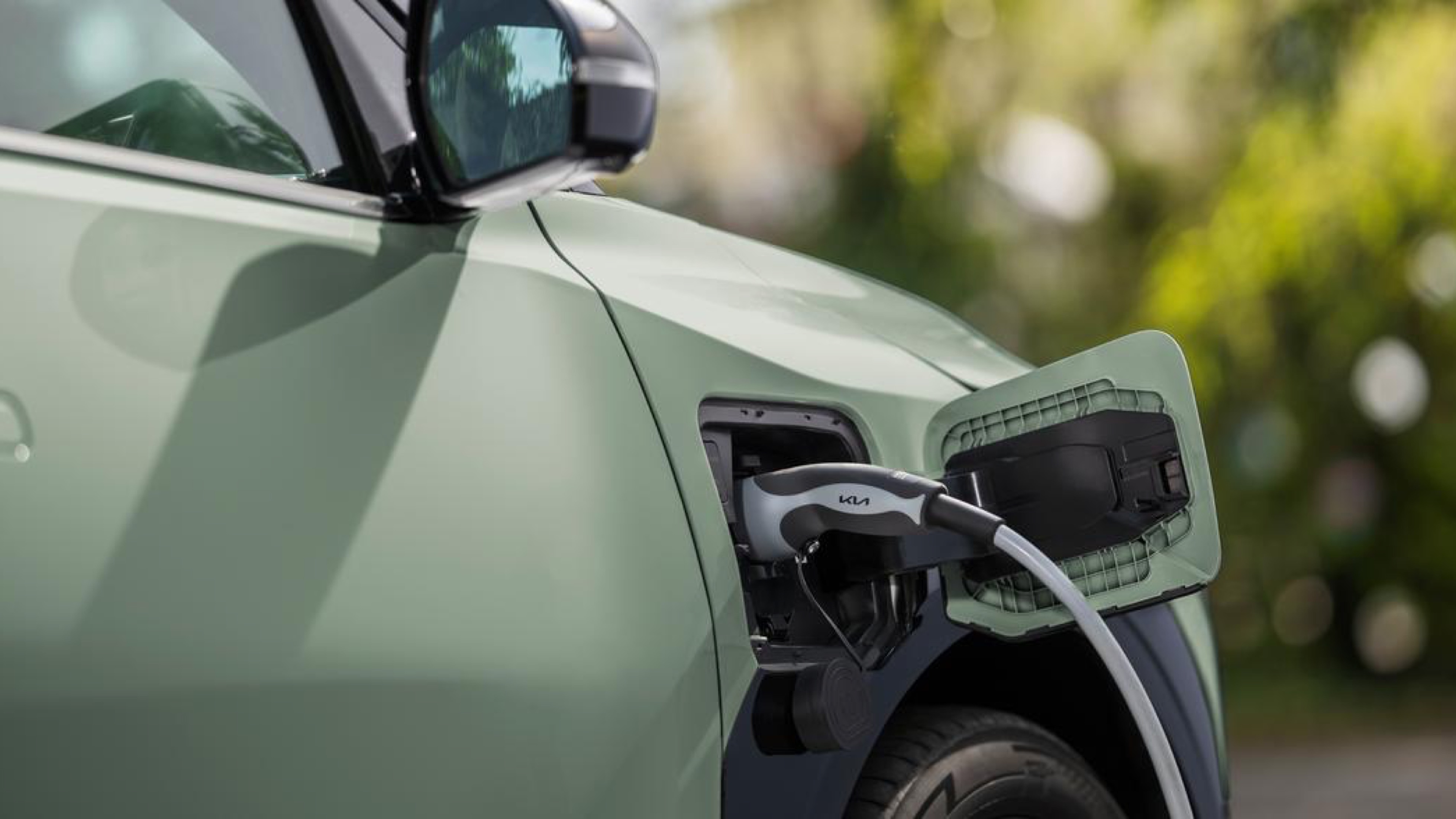
How does bi-directional charging work?
At its core, bi-directional charging allows energy to flow both to and from an electric car’s battery(EVs)
. This is unlike standard charging, known as unidirectional charging, which only draws electricity from the grid to charge the car. Bi-directional charging enables your EV to return electricity to your home, devices, and even the grid itself.
With the right equipment, an EV battery becomes a versatile energy storage system capable of storing energy when it’s cheapest or cleanest and using it when it’s most needed.
/EV9_F-Facing_With-Lady(940x529).jpg)
How does a bi-directional EV charger work?
A bi-directional EV charger alternates between two primary functions:
1. Charging – This is when the charger draws power from the grid or renewable energy sources, such as solar panels, to charge the EV battery.
2. Discharging – The charger sends stored energy from the vehicle back into a connected load, like your home, an appliance, or the electricity grid.
This functionality is made possible by specialised hardware and software, including an inverter for AC and DC(EVs)
currents, which converts AC (used by homes) to DC (used by EV batteries), and vice versa.
However, it’s worth noting that not all EVs or chargers support bi-directional charging, although the infrastructure is continuing to evolve and advance.
/ev6_940x529.jpg)
Types of bi-directional charging:
Vehicle-to-Load (V2L)
Vehicle-to-load(EVs)
allows you to power individual devices or appliances directly from your electric vehicle
. This can be especially useful if you’re camping or staying in a location off the grid, walking outdoors, or experiencing an emergency with limited access to power.
Several Kia electric vehicle
support vehicle-to-load functionality, including the Kia EV6 and Kia EV9. You can plug in a laptop, kettle, or even a TV, turning your EV into a powerful and portable energy supply.
/Vehicle-to-Load(940x529).jpg)
Vehicle-to-Home (V2H)
Vehicle-to-home allows you to power your home using energy from your EV. This can be especially useful during power outages, where it can act as a backup battery. You could also use it during peak rate periods when electricity is most expensive.
If you charge your EV at home
during off-peak hours, you can then use that stored power to run your home during expensive or high-demand times.
/EV6x2_F-Fracing_&_B-Facing(940x529).jpg)
Vehicle-to-Grid (V2G)
Vehicle-to-grid takes advantage of bi-directional charging, allowing you to send energy stored in your EV battery back to the grid. This can support both national and local grid stability by helping to balance supply and demand and reduce the risk of power cuts.
There may also be financial incentives to doing this, such as earning money by selling the energy stored in your EV back to the grid when demand is high.
/EV9_White-Peral_L-Facing_(940x529).jpg)
What are the benefits of bi-directional charging?:
Energy independence
You’re no longer fully reliant on the national grid. With bi-directional charging, you can store energy in your EV during off-peak times when electricity is cheaper and more abundant. You can then use it later when demand and costs are higher. This gives you greater control over how and when you use the energy in your home.
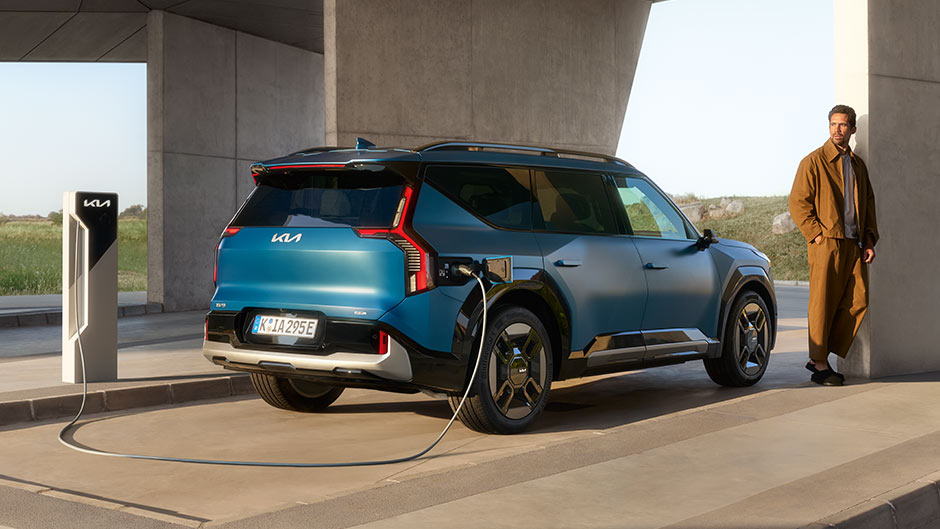
Cost savings
With time-of-use electricity tariffs, you can charge your electric vehicle
when prices are low and use that energy when prices are higher. Over time, this could be reflected by a reduction in your home’s energy bills and provide a return on your EV investment. You can also sell the energy stored in the battery back to the grid.
Grid support
By returning energy to the grid at critical times, EVs can potentially reduce the strain on the national power infrastructure.
Common FAQ
-
Q
Is bi-directional charging worth it?
collapsed -
Q
Which cars support bi-directional charging?
collapsed -
Q
What’s the difference between unidirectional and bi-directional charging?
collapsed -
Q
Is vehicle-to-grid (V2G) available in the UK?
collapsed -
Q
Does bi-directional charging harm the EV battery?
collapsed